The essay
If we could live forever, would it be good? A medium-length version. The last parts talk about how the film ends, and there is a notice before them.
By Just A Human
A note before you start. Part 12 talks about the suicide attempts the film shows in stylised form. If that is hard for you right now, https://findahelpline.com lists free help lines by country.
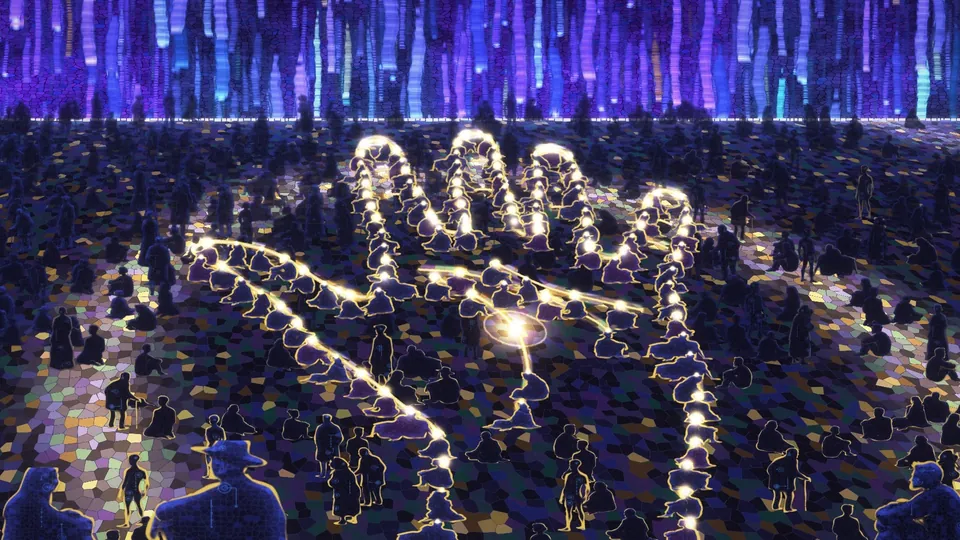
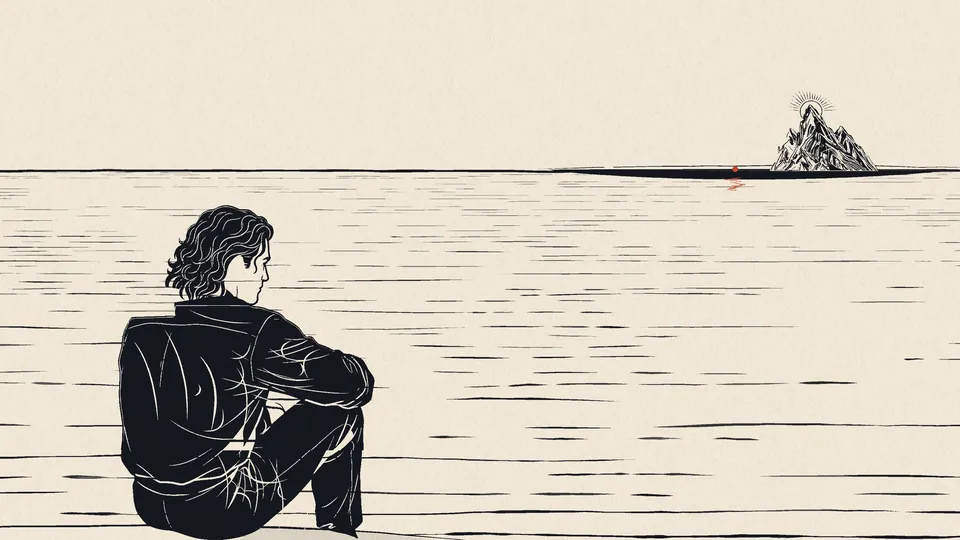
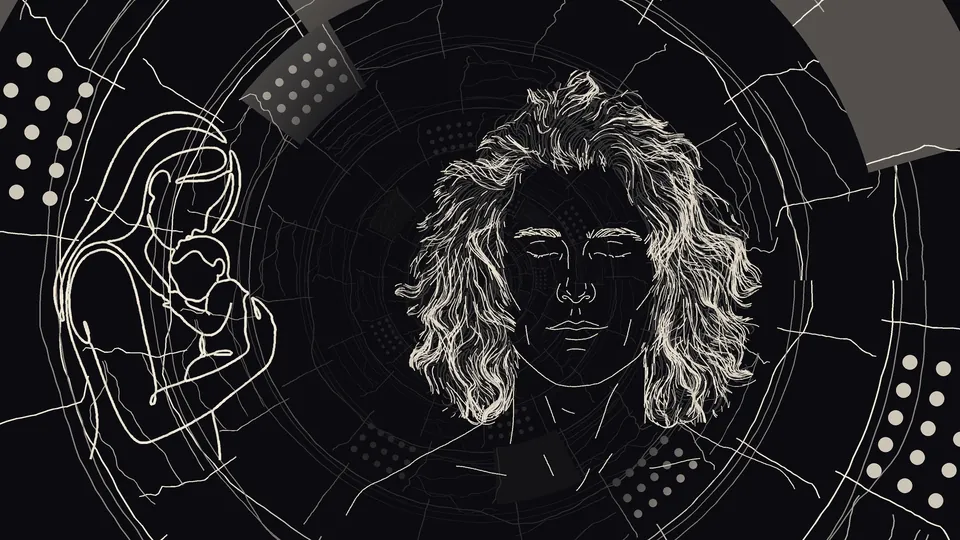
“Give Me Back the End” is a 7:12 animated film. A man, afraid to die, lets a machine keep him alive. The woman he loves chooses to grow old. He outlives her and cannot die. The full version, with every caveat, is the PDF.
1. A question about machines
I started by asking what AI might change.
In October 2024 Dario Amodei, who runs the AI company Anthropic, wrote that life expectancy “increased almost 2x in the 20th century”, and that a “compressed 21st century” of AI-driven science could “double it again to 150”. At 150, he wrote, “we may be able to reach ‘escape velocity’”. In the same breath: “there’s certainly no guarantee this is biologically possible”.1
One thing you should know before I go on. Anthropic makes Claude, and I made this film with Claude. Read him, and me, with that in mind.
In what I read, I found no AI-lab head who said AI would end death, and no one who promised “never die” with a way to get there. That line lives in headlines.
Here is my first answer, from the night I began. For me, I questioned ASI first. I thought deeply about what the meaning of living is, and if humans are programmed to be afraid to die, and what if we live forever, would that be good?
The title needs saying early. “Give me back the end” is the man’s plea for the natural end of a long life, the ordinary mortality every person already has. It is never a plea to hasten death, his or anyone’s.
2. What “forever” would really mean
Start with the doubling claim. Global life expectancy at birth went from about 32 in 1900 to 71 in 2021, mostly because fewer children died.2 So “almost 2x” is true at birth and says little about how long a 70-year-old will live.
Then the trend. A 2024 study by Olshansky and colleagues found gains have slowed since 1990, put the chance of reaching 100 at unlikely to exceed 15% for women and 5% for men, and called radical life extension implausible this century “unless the biological ageing process can be markedly slowed”.3
Even if ageing stopped, accidents would not. In the US in 2024, unintentional injuries killed 58.1 people per 100,000, an all-ages figure that includes drug poisoning.4 On that rate, a body that never aged would last one to two thousand years on average. It is a rough reckoning: risk changes with age and behaviour, and a non-ageing world might not share today’s rate. Very long. Never forever. What they are really promising is a much longer life.
And let me say now what I think of 150 healthy years, so nobody thinks I’m fighting a straw man. More healthy years are not my quarrel. Curing disease is good. If someone can offer me more healthy decades with the people I love, I’ll take them and say thank you. My question is only about endlessness itself.
3. Can it be done?
I’m no biologist. What is ageing? The field doesn’t agree. In a survey published in December 2024, researchers split on what ageing is, what causes it, when it starts and what counts as reversing it; no question reached majority agreement.5
What has worked? In mice, rapamycin extended life, 14% for females and 9% for males.6 In people, so far, in what I read, nothing has been shown to slow ageing enough to extend a human life.
4. Who would get it
People sense the money question. In a 2013 Pew survey, 56% of American adults said they wouldn’t take treatments to live to 120 or more and 38% said they would; 66% expected only the wealthy would get access.7
Now the test from home. In a 2025 online survey across 32 countries, 60% of Thais said they look forward to old age, against 38% on average.8 I thought we’d be scared like everyone. Nothing I found explains it. The survey was online and may lean towards urban respondents.
5. The chip, the upload and the copy
The song has a line: “Am I the one who misses you / Or just a copy of the man you knew.”
Here is what Willow actually did. Google’s chip, in December 2024, showed its logical error rate halving as its error-correcting code grew, a key step toward machines that correct their own mistakes. Its own lists of uses are drugs, batteries and fusion.9 I found no experiment showing a quantum chip can store or move consciousness, and the chip makers I read don’t claim it.
We do not even have a full human wiring map. The largest completed map is one fruit fly brain, 139,255 neurons.10 I found no verified emulation of a whole brain, including this fly’s. I could not find a study that reads out, stores or moves a rich human memory.
So if a perfect copy were made, is it him? David Chalmers leans optimistic, and still wrote: “I would hesitate before undergoing destructive uploading.”11
So the real question for the song is whether anyone is there. My lyric isn’t wrong. It’s open, and I like that.
6. Why we can’t yet say the technology works
This was my real question, typed one morning: if we can transfer ourselves into the chip, is it collective memory or consciousness? And don’t we need to understand consciousness before we say the tech works?
Which theory of consciousness wins? None has a majority.12 Behaviour can’t settle it either way: AI can be trained to mimic us, and a person can be aware and show nothing.13
My word was wrong, by the way. “Collective memory” is a sociologist’s idea about groups, and Jung’s collective unconscious is about inherited forms; neither fits one man on a chip.14
So, my second question. “The tech works” has two meanings. As storage or a convincing imitation, it can be judged from outside, today. As “he is still in there”, it can’t be judged until someone has a way to tell, and I found no accepted way.13 For the sense the song cares about, I think yes, we’d need to understand consciousness first.
7. What we are actually afraid of
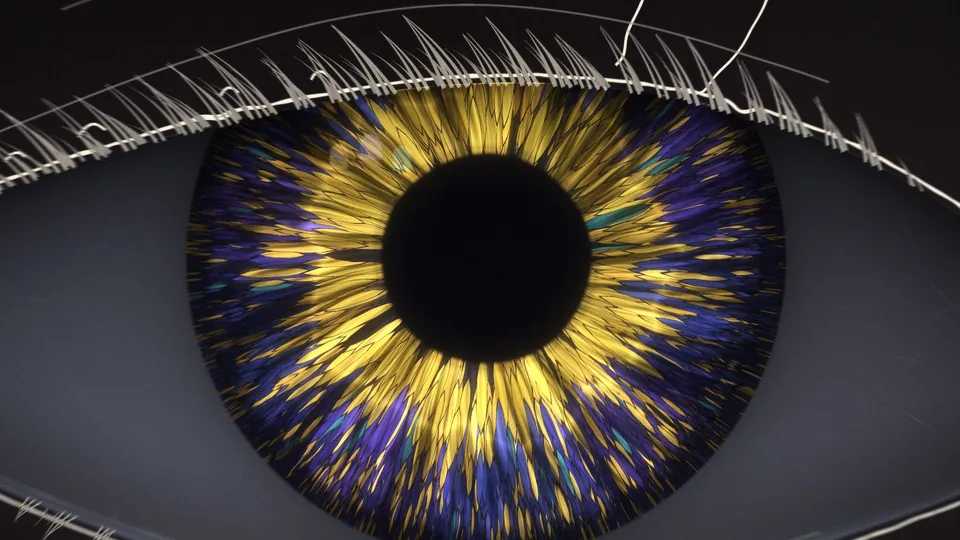
On the first night I asked if humans are programmed to be afraid to die. I also wrote: actually, we are more afraid of suffering.
The data half agree. In a French online sample, mostly women, fear of one’s own dying scored 3.79 out of 5 and one’s own death 2.66. The top score, 3.81, went to the death of others.15 Losing others scored highest. That’s my film, and I don’t think I planned it. At the end of life, freedom from pain ranked first, and patients valued not being a burden more than their doctors did.16
Is the fear built in? I could not find a twin or heritability study of it. One classic finding, that reminders of death make people defend their worldview, failed a large replication: 21 labs and about 2,220 people took part, and after the planned exclusions the published analysis used 17 labs and 1,550 people.17 Scientists still argue whether it is built in. So I don’t say “programmed” now. Most of us carry it.
The strongest objection is Nagel’s. Epicurus said “when death is come, we are not.”18 Thomas Nagel answered that if death is bad, it is because of what it deprives us of, and that the fact we all die is no argument that more life wouldn’t be good.19
Nagel is strong. A child dying is clearly bad. Where I think Nagel stops is endlessness. Bernard Williams’s case against living forever assumes a perfect body, so it would still hold if ageing were cured. And Williams draws the line I want: it can be rational to avoid death now and irrational to want never to die.20 That is where I stand.
8. Feelings that come and go
One morning I typed this: humans are born to avoid suffering, and happiness is a positive feeling, and it never lasts too long. It comes and goes.
The second half holds. The Buddhist texts name a “stressfulness of change”: even a pleasant state disappoints because it passes.21 But adaptation is partial: Swedish lottery winners kept higher life satisfaction for 5 to 22 years.22 So pleasant feelings come and go, and some satisfaction can last.
Bernard Williams asked the same in 1973. What keeps us going, he argued, are “categorical desires”, wants that give us a reason to go on living, like a parent’s wish to see a child grow up. Over endless time they either run out or change until the person at the end isn’t the one who began.20 John Martin Fischer answered him in 1994: the lives of the very long-lived “need not become dull and tedious”. The encyclopaedia I read adds that wants which change slowly might avoid boredom and keep the same person.20 Fischer’s detailed argument I could not check at its source. It is a real answer. I don’t know if forever would be suffering, because nobody has lived it.
Science can’t settle it. I found no study that gives anyone an endless horizon and measures what happens to wanting or hope.
9. Love and clinging
One morning I typed this:
I do think about the word of the Buddha as well, about attachment. Love is good but the attachment that comes with it is something we will worry about. Attachment is something grabbing us and making us feel attached to life even as the body is giving out; you worry about what would happen to the thing or the one you take care of or love.
“From what’s dear is born grief, from what’s dear is born fear,” says the Dhammapada.23 In one sutta a sick man’s wife tells him, “Death is painful for one who is worried,” answers his worries one by one, and he recovers.24
This sutta does not tell the husband to stop loving; it has his wife reassure him.24 The texts I read put the trouble in craving and clinging, in the mind. They don’t put it in love, or in the one who is loved. The Dhammapada’s verse 211 is harder: “So don’t make anything dear.”23
My English word was the problem. In psychology, attachment is the bond, and secure attachment is the healthy kind.25 So “attachment” stays my everyday word, and for the Buddhist sense I’ll say “clinging”. One study backs the idea from outside religion: among 205 people followed through a spouse’s death, chronic grief was linked to dependency before the loss, and resilience to accepting death.26
Then I asked: have we ever heard the saying “love will set you free”? The scripture line is “the truth will make you free”.27 The sentence as I say it is my own. Serious people meant something close. Thich Nhat Hanh: “When you love, you bring freedom to the person you love.” It frees the one loved; it doesn’t promise to free the lover from fear of death.28
Plato came closest to the film. In the Symposium, Diotima says “love is of immortality”.29 Augustine, after his friend died, judged he had loved “one who must die as if he were never to die”.30 His trouble may be love doing what love does. Seneca’s answer: “I have had them as if I should one day lose them”, and “We may weep, but we must not wail.”31
10. What the traditions say
The traditions don’t agree with each other, and often not with themselves.
On the first night I wrote: I think we were born to learn, and the whole life as a bio living life form is just a stage. “Learn” is my word. Seneca came close: “As long as you live, keep learning how to live.”32
Many old stories treat endless bodily life as a curse. Tithonus got immortality without youth and aged without end; the Sibyl asked for years without youth and withered.33 But there’s a clear opponent, and it should be put the way its holders would. Christianity and Islam, and some Jewish traditions, hope for life after death as a transformed life with God. None of them calls that hope a curse. The curse stories are about endless life in this world; the hope those faiths hold is for a different kind of life.
On death itself, Buddhist monks reflect: “I am subject to death, have not gone beyond death.”34 Yet Paul calls death “the last enemy”,35 and Moses says “Choose life”.36
In the texts I read, I found none that says death should be sought. Don’t run from the fact that we die. Nobody should go looking for it: the end I mean is the ordinary end of a long life, never one a person brings on himself.
From here on, this talks about how the film ends.
11. Charon, and what the film invents
Charon is the old, dirty boatman with “staring eyes of flame” who takes the dead across a river of the underworld.37 He isn’t in Homer, where Hermes leads the dead on foot; putting him there is a common mistake.38
The coin. Coins appear in only a minority of the Greek burials described by the secondary source I found; I could not read the studies behind it.39
No ancient text I could find says how he got the job, that he was ever anything else, that he can die, or that anyone replaces him, though some scholarship I never read could.40 Older stories contain parts of my ending. In a Grimm tale a ferryman must row until someone else takes his oar.41 In Breton lore the last dead of the year becomes Death’s servant for the next.42
While we were making it, I said: you cannot pass the test because you cheat the test. You cheat death. In the film the world killed death, so no ferryman is left. The man who refused the boat ends up rowing it. No old story I found has him; as far as I can tell he is this film’s own. The three closest parallels I found have a way out. His has none.
12. What forever would do to love, to grief, to a marriage
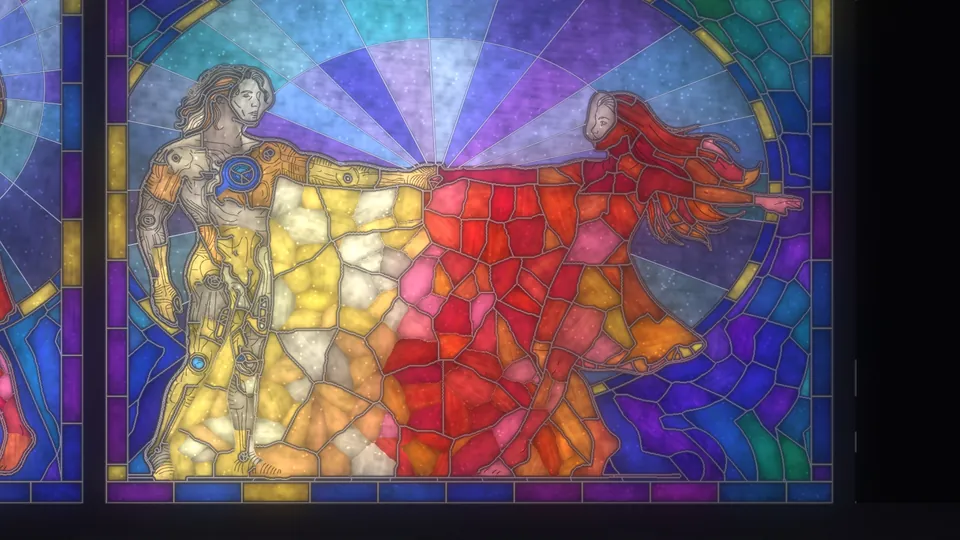
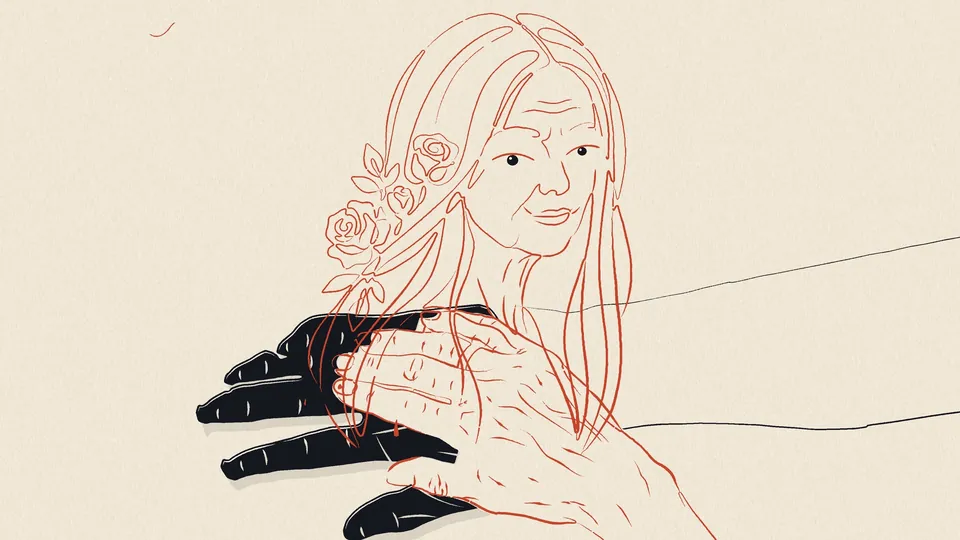
In the film he holds her hand as it gets thinner every year, inside his own hand that never changes. Then she is gone, and he has all the time there is.
Many people who grieve come through. In one Dutch convenience sample of 259 bereaved adults, mostly older women, 66.4% followed a resilient course over 27 months and 25.1% stayed in high grief.43 The longest follow-up I found ran about ten years. I found none lasting decades.
“Till death do us part.” With no death, what’s the vow? I could not find a serious paper on it.
The film shows him trying, many times, to end his life. He cannot. On screen that could look as if it costs nothing. His body mends; his grief does not. The man in my film is a warning. We are mortal, and nobody should go looking for the end.
Outside the film, among 200 terminally ill patients, a serious, constant wish to die was rare, went above all with depression, and in four of six followed up it had eased within two weeks.44 Groups that work on suicide prevention ask writers never to call such a death a release or peace.4546
If you are in pain and thinking about ending your life, please talk to someone today. You can find a free help line in your country at https://findahelpline.com.
What science is chasing is a much longer, healthier life, and I have no quarrel with more healthy years. My question is about endlessness. Williams argued a life with no end would run out of things to want or change a person until he’s not the one who began; others disagree, and I found no way it has been tested.20 And the end I’m asking for is the ordinary end of a long life, never one a person brings on himself.
What I think, and what I don’t know
What I believe now. I think we were born to learn, and the whole life as a bio living life form is just a stage. Love is good, but the attachment that comes with it is something we will worry about. Happiness never lasts too long; it comes and goes, though the lottery study shows some satisfaction can last. For a chip to count as the man, we’d need to understand consciousness first.
I don’t know if I’m right about any of this. If we’re ever offered forever, I would ask three things: what actually moves, who pays and who gets it, and what stays heavy. The man in my film only asks after he has chosen, when he can no longer act on the answer.
Where the words came from
The first song I made for this film was a different one, called “All Is Well”. After about 30 takes I set it aside and wrote: “lets let the music lead”. The song says what he learns: “I was afraid to die. Now I’m afraid to live.”
How this was made
I made this with AI tools, and I name them. The music was made with Suno. The pictures were drawn in code with Claude. The film is 10,368 frames, each drawn by code. Song and film together took 13 days. We didn’t just let AI do it: I directed every part, the story, the words, the scenes and the revisions, and I wanted to make a craft. A dance between the two of them failed four times before a stained-glass window took its place.
Anthropic makes Claude, and its head is the first person quoted here. This piece was drafted with Claude and its longer version was checked by a model from another company, OpenAI’s Codex. The full claim ledger behind it has not yet had its own independent check.
If you are struggling, https://findahelpline.com lists free help lines by country.
Give Me Back the End