

Power & money · 14 min read
The nameplate is bigger than the door
What one renamed word tells us about intelligence, money, history and power.
The questionWhen a name arrives before the thing, who decides what it means?
7 notes from the making of this piece, before it was published: where we were wrong, what we cut, what we checked. Real corrections made after publication go on the Corrections page. Switch off for a clean read.
How to read the colours
Tap a colour to read only those, one after another.
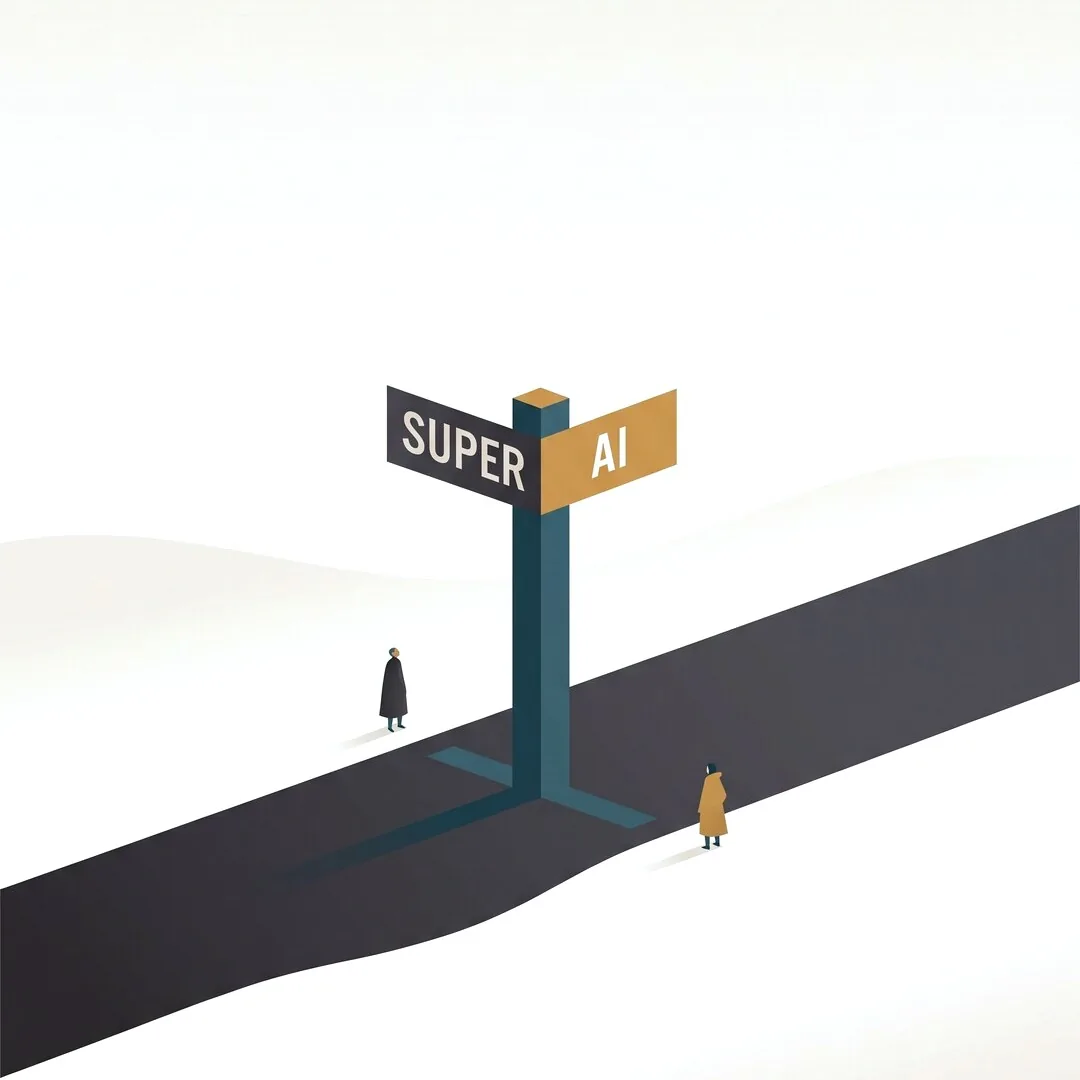
On 22 September 2026, at the United Nations, the American president said the word “artificial” makes AI “sound fake”.1 A week later he signed Executive Order 14434, Inaugurating the Era of Super Intelligence.2 From that day, federal agencies were told to stop writing “artificial intelligence” and “AI”, and to write “Super Intelligence” (“SI” for short) instead.2
I laughed a little when I read the news. Then one question stayed with me. Why? We don’t really have that yet.
Before we begin: Anthropic, the AI company, appears in this story, and its models also helped with our research. The note at the end says how we handled that.
So before forming any opinion, I tried to understand the world around this one word. I started with a long conversation with an AI model.
What the order actually says
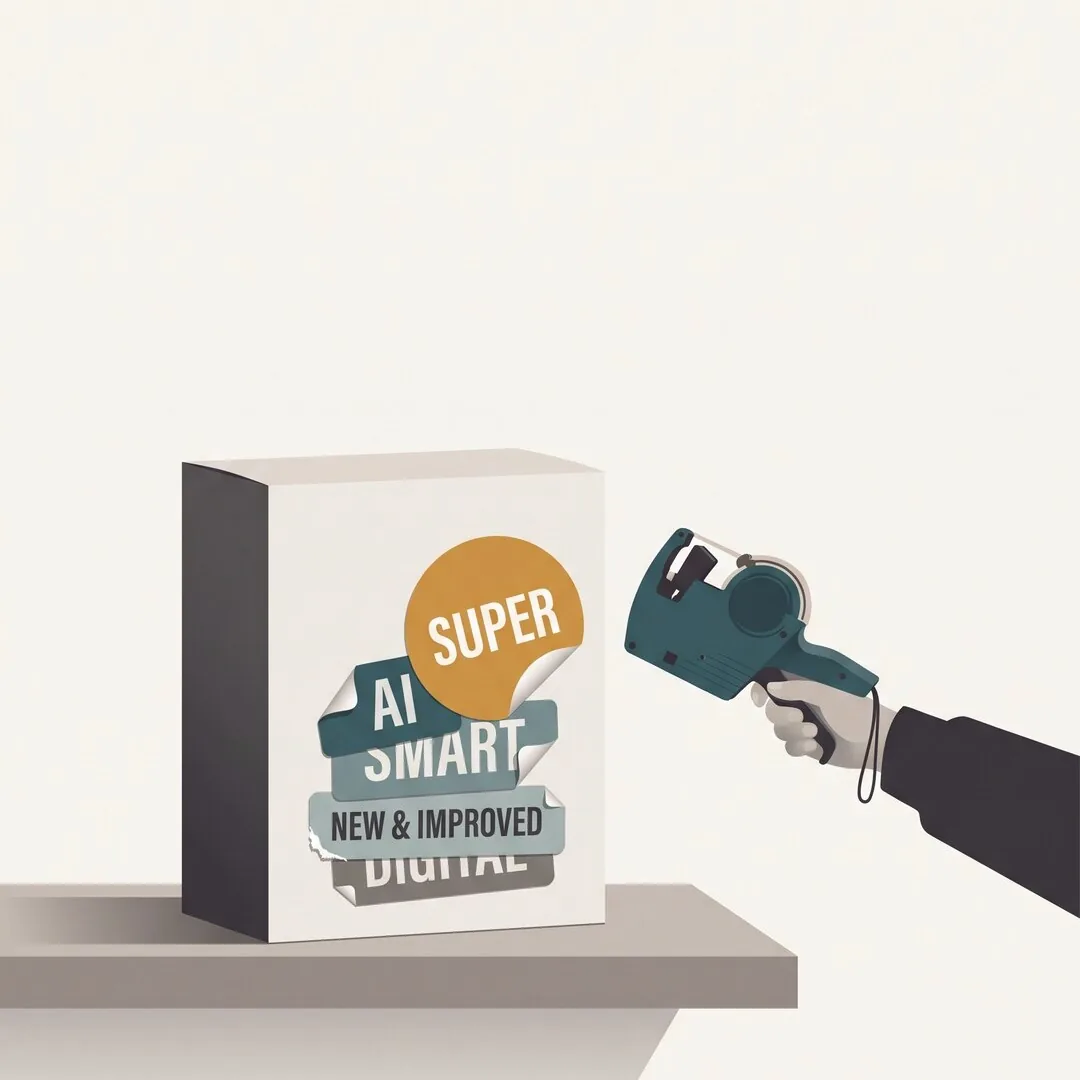
The order is short, and one sentence of it settles the first question. Section 3(a) says Super Intelligence means “the technologies and systems encompassed by the term ‘artificial intelligence’” as US law already defines it.2 The same systems. A new name.
The real definition comes later. Section 3(b) gives the President’s science adviser 60 days to send the President “proposed legislative language” for one.2 That is about 28 November. It is a proposal, not a law, and nothing says it must be made public.2
The name being retired was never chosen with ceremony either. In 1955 John McCarthy and three colleagues proposed a summer study of “artificial intelligence” at Dartmouth College.3 He explained the choice later: “I had to call it something.”4
An executive order directs the executive branch. It cannot change a law, it binds no company, state or country, and it appropriates no money.25 It also has a twin: in 2025 another order gave the Defense Department the secondary title “Department of War”, with the same two steps, use the name now and propose a law in 60 days. A year later it is still not law.6 The Gulf of Mexico became the “Gulf of America” by order too.7 Now a technology.
The case for the new name
The rename deserves its best case. The White House says these systems are “not simply imitating or automating human intelligence”, so “artificial” is the wrong word.8 That is a real argument. But we found no scholar or commentator arguing that the change makes the language more accurate.9
What “super” would have to mean
To judge whether “super” fits, I had to ask what intelligence is. It is the hardest part of the story, because the people who study it disagree. François Chollet, who built a well-known test of machine reasoning, says it is not how much you know but how efficiently you learn something new.10 My own instinct, before I read him, was close to that: how fast something learns what it was never trained on. It was a relief to find serious people standing nearby.
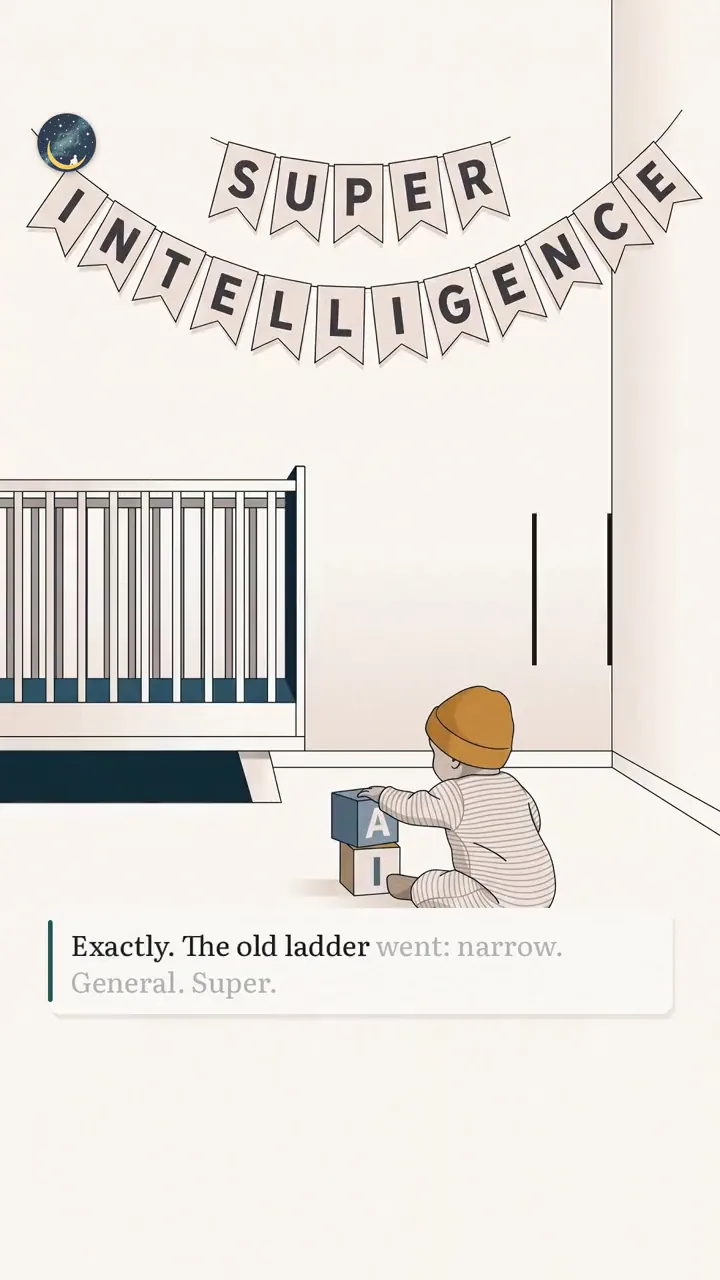
People usually describe three rungs: narrow AI, which works inside one bounded problem; general AI, where the definitions split; and superintelligence, which Nick Bostrom defined in 2014 as an intellect that “greatly exceeds” human performance in virtually all domains of interest.11 Researchers who graded today’s AI like a person, across ten areas of ability, gave GPT-4 27% and GPT-5 57% of a well-educated adult’s profile, and called the shape “highly jagged”.12
Progress is real and fast. On ARC-AGI-3, a test built to measure learning in new situations, the best systems scored 0.51% at launch in March 2026. By September, verified results were above 96% with a helper tool that keeps the model’s reasoning between steps, and about 40 to 55% without it.13
But the profile is uneven. In a field experiment with 758 consultants, AI made them better inside its “jagged frontier” and about 19 percentage points less likely to be right outside it.14 My reading: on breadth, we are closer to a general mind than most people assume. On learning how to learn, not yet. Real progress and a definition of “super” are two different things.
One sentence, two jobs
When I first heard about the order, I said it felt like two meanings with one goal: an announcement, and the name of a project, both asking us to trust it. I didn’t expect to find both inside one sentence of the order.
Section 1 describes today: these systems “far exceed what was envisioned”. And it promises tomorrow: the name captures “the promise, potential, and rapidly advancing capabilities”.2 One sentence describes the present and sells the future. That is a reading of the text, not a claim about why it was written that way.
Why can a promise make itself true? Robert K. Merton described the self-fulfilling prophecy: a false belief, once people act on it, can come true, like a healthy bank that fails because a rumour sends everyone to withdraw their money.15 If enough people act as if Super Intelligence is coming, money and talent may move toward it. That is my inference.
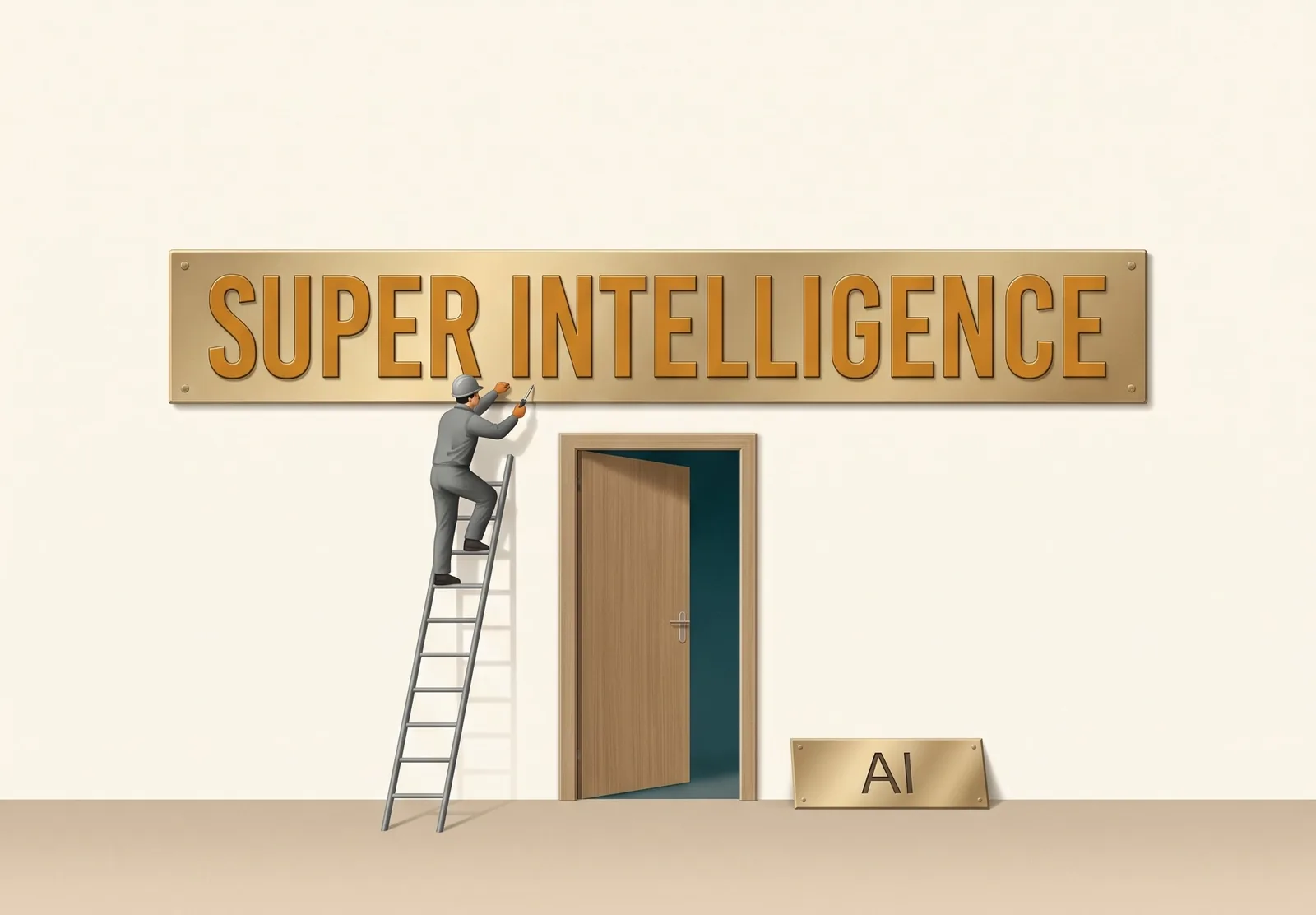
Most of us have met a smaller version. Someone gets the title before the raise. One day a small brass plate on the door says “Assistant”; the next day a bigger one says “Head of Strategy”. Same desk, same chair, same work. Sometimes the job grows into the title. Often it doesn’t, and everyone in the office can tell.
It breaks here. Inside a company, the employer decides your title and everyone has to use it. A country’s word for a technology is different: the rest of the world has to choose to answer to it.
How names move value
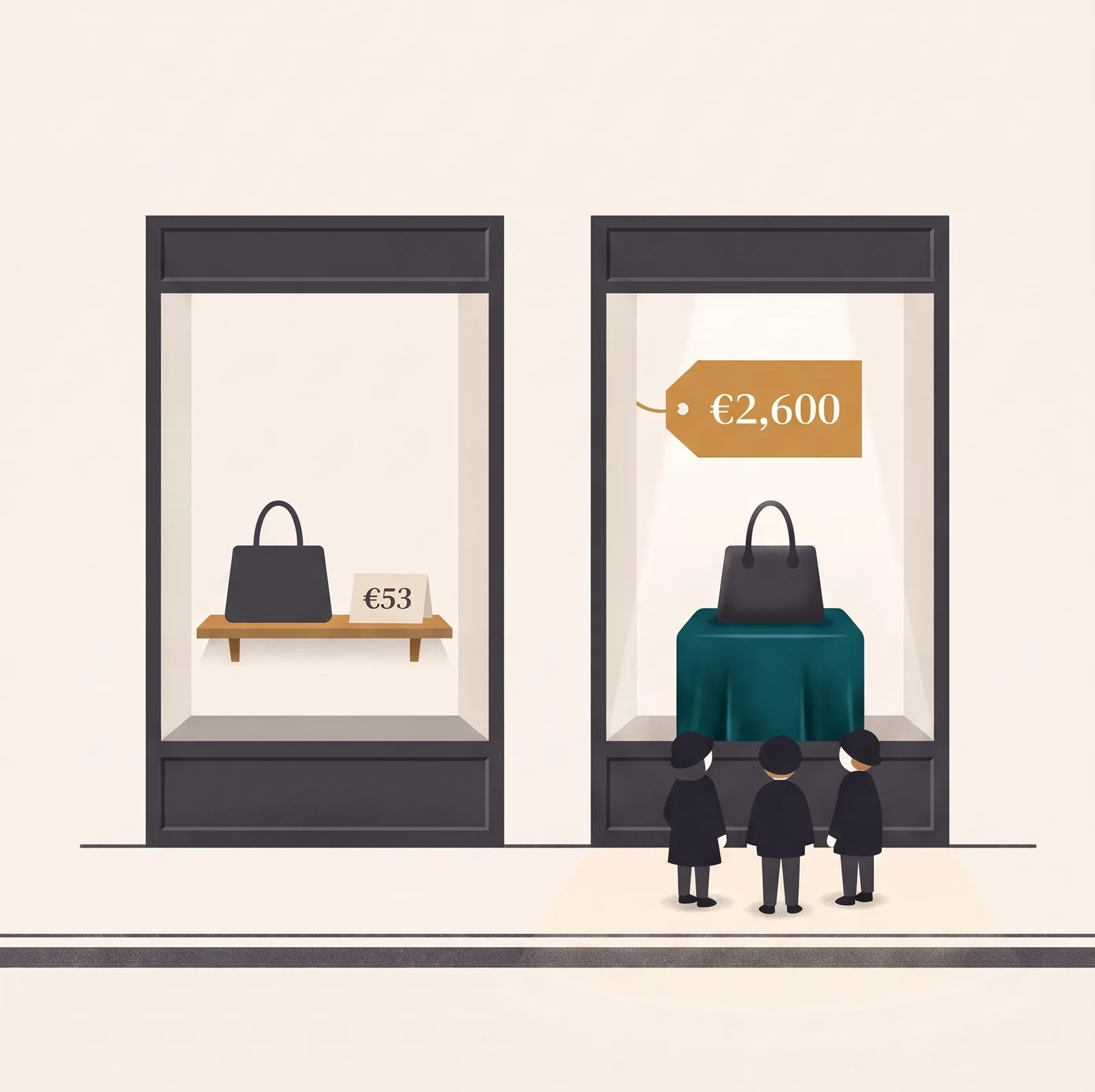
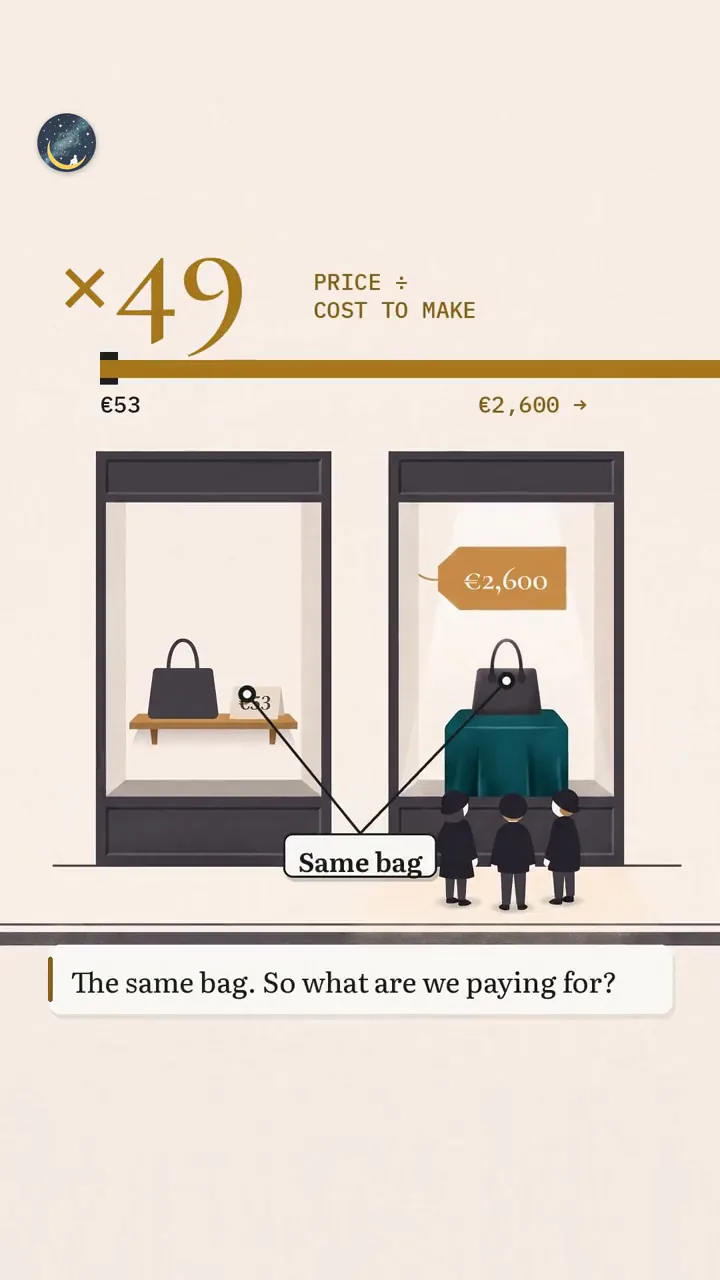
I had a guess about luxury bags: the same bag costs a little to make and a lot with the right name on it. The real number was better than my guess. In 2024 Milan court documents showed that a contractor was paid as little as €53 to make a Dior bag that sold for €2,600, about 49 times more.16 The shop price also pays for design and stores. The case was about labour, and Dior was not found guilty of anything: its Italian unit was put under court administration over conditions at its suppliers. So this is no joke about cheap production. The workshops were in Italy, though Chinese-owned.
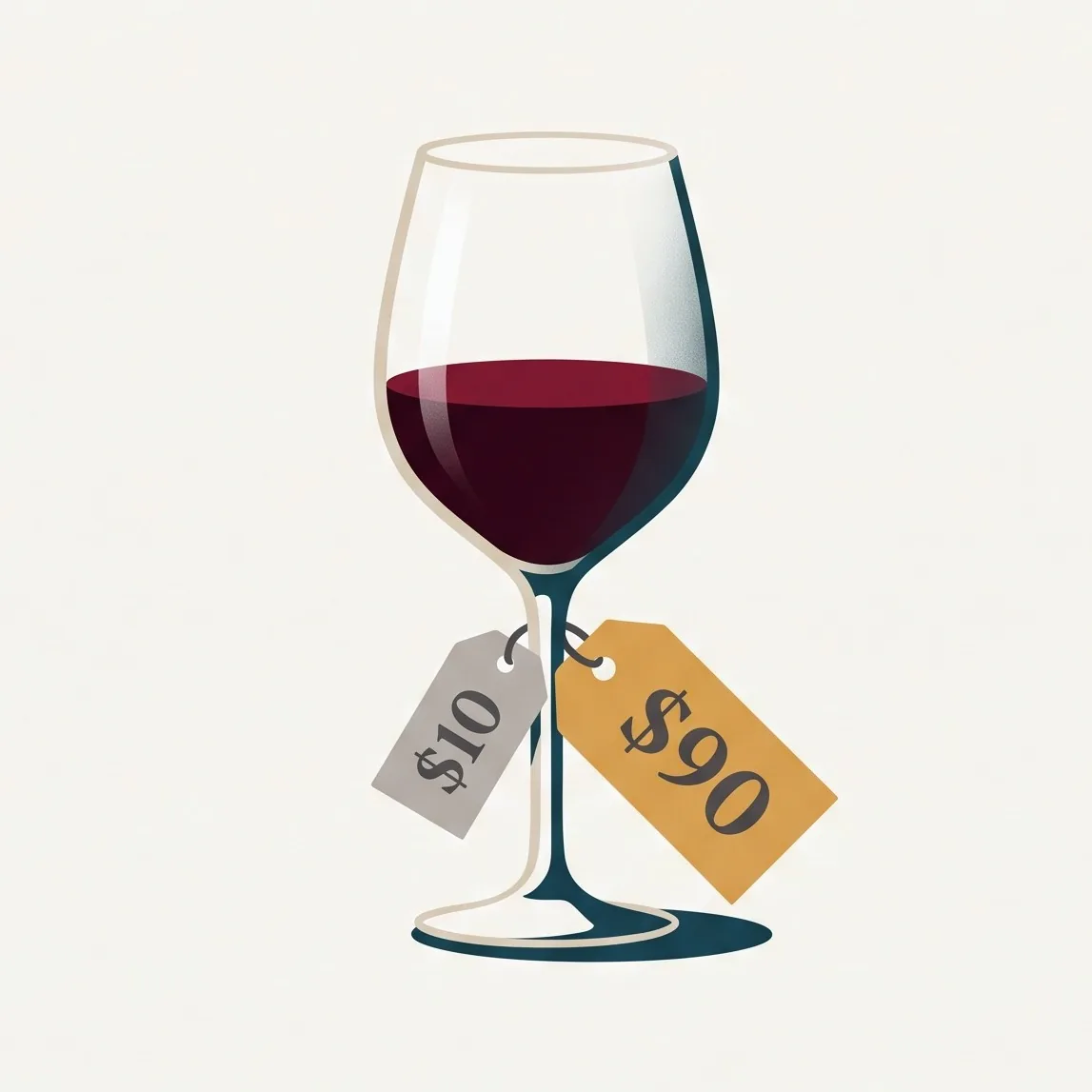
The label changes the experience, not just the price. In a 2008 brain-scan study, people rated the same wine as more pleasant when told it cost $90 rather than $10, and the brain region linked to pleasure was more active too.17 It was a small study, 20 people.
Where names fail. When buyers can test the thing, labels matter less. The price of a fixed level of AI capability has fallen between 9 and 900 times a year.18 My guess is that business buyers benchmark, so a label counts for less. One 2024 study went the other way: telling buyers a product description involved “AI” lowered their intention to buy.40 The old name may not be the handicap the order assumes.
Open. Whether “SI” will move any price at all. I used to think it could justify higher prices for AI. I’m no longer sure.
The money behind the hurry
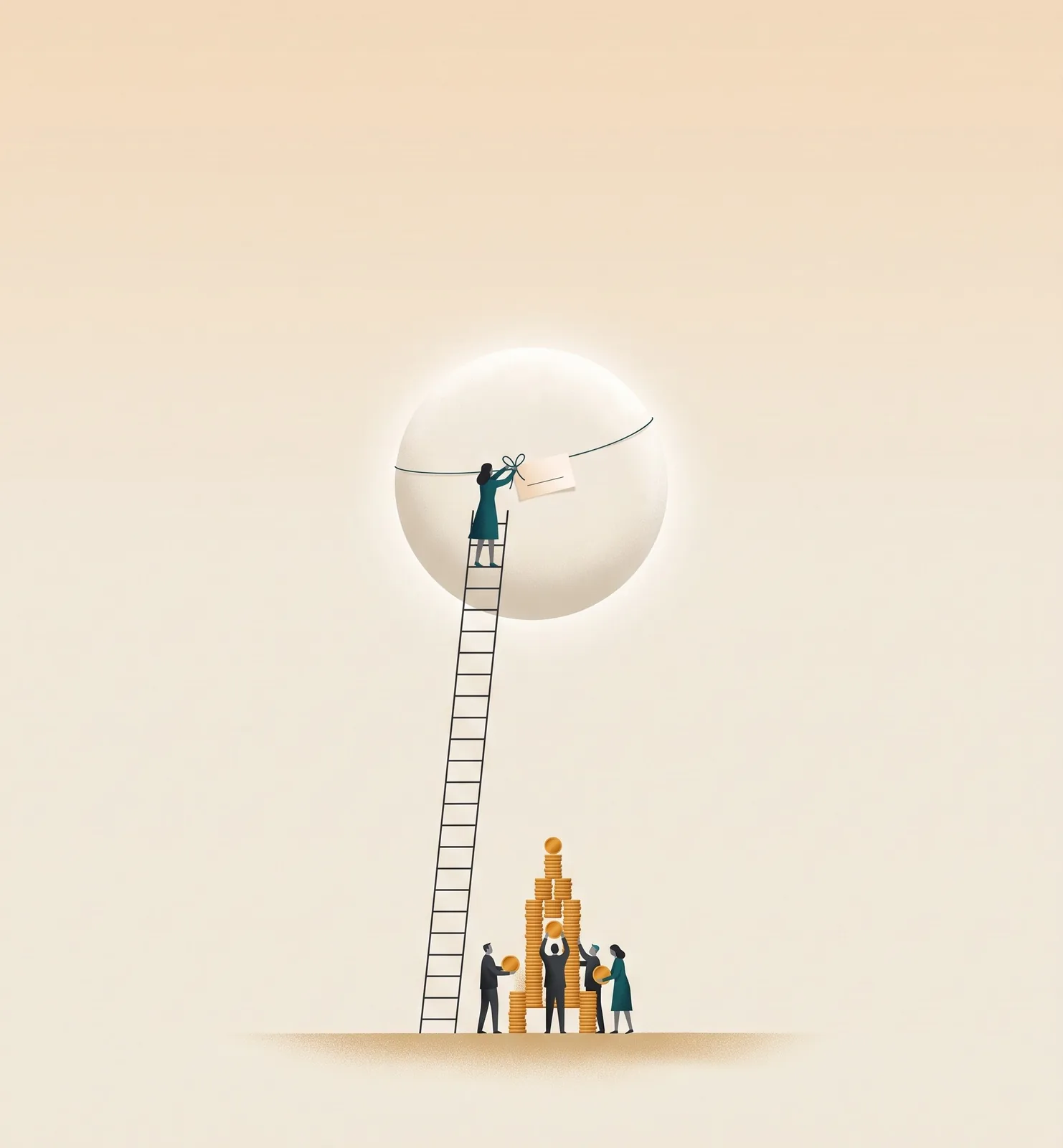
Why would anyone want a bigger name for AI right now? I looked at the money. The Bank for International Settlements reported that the five largest cloud companies were set to spend over a trillion US dollars on AI infrastructure across 2025 and 2026.19 Goldman Sachs estimates AI needs about $300 billion a year in revenue just to break even on that build-out.20 Spending is far ahead of earnings. Whether the gap closes, and how, nobody can say.
On 12 September 2026 Dario Amodei, the chief executive of Anthropic, published an essay calling for the industry to slow the pace at which it improves its models, adding that “pacing does not mean halting”.21 The administration said it would not put on the brakes.22 Anthropic was in a public dispute with the Pentagon, which had labelled it a supply-chain risk. A judge has blocked that label.23 As I said at the top, Anthropic’s models helped with our research, so here I have kept to the public record.
What I can say is about effect, not intent. A slower pace would give revenue time to catch up with spending. It does not obviously help the lab that wrote the essay either, which is why I treat this as an effect and not a motive. My reading: the money explains the hurry. It does not explain the name.
The room with China
The other half of “why now” is geopolitics. China’s president Xi Jinping was in Washington from 23 to 25 September. Analysts found no progress on chips, rare earths or Taiwan.24
Then the word itself. The White House fact sheet said: “The two leaders agreed to use the term ‘super intelligence’ rather than ‘artificial intelligence’.”25 The next day China’s foreign ministry said China “respects their choice of the term”. Its own text kept saying “artificial intelligence”.26 So China respects the choice of the new term. It did not agree to it. Those are different sentences.
The order came four days after the visit ended. Is there a connection? I don’t know. I once thought something must have been on the table. Nothing published shows it.
What does the reporting say about motive? The order itself names no money, China or security reason. Bloomberg framed it as a response to public backlash.27 That is reporting, not proof.
Has a nation done this before?
Yes, many times. History shows when naming a future works.
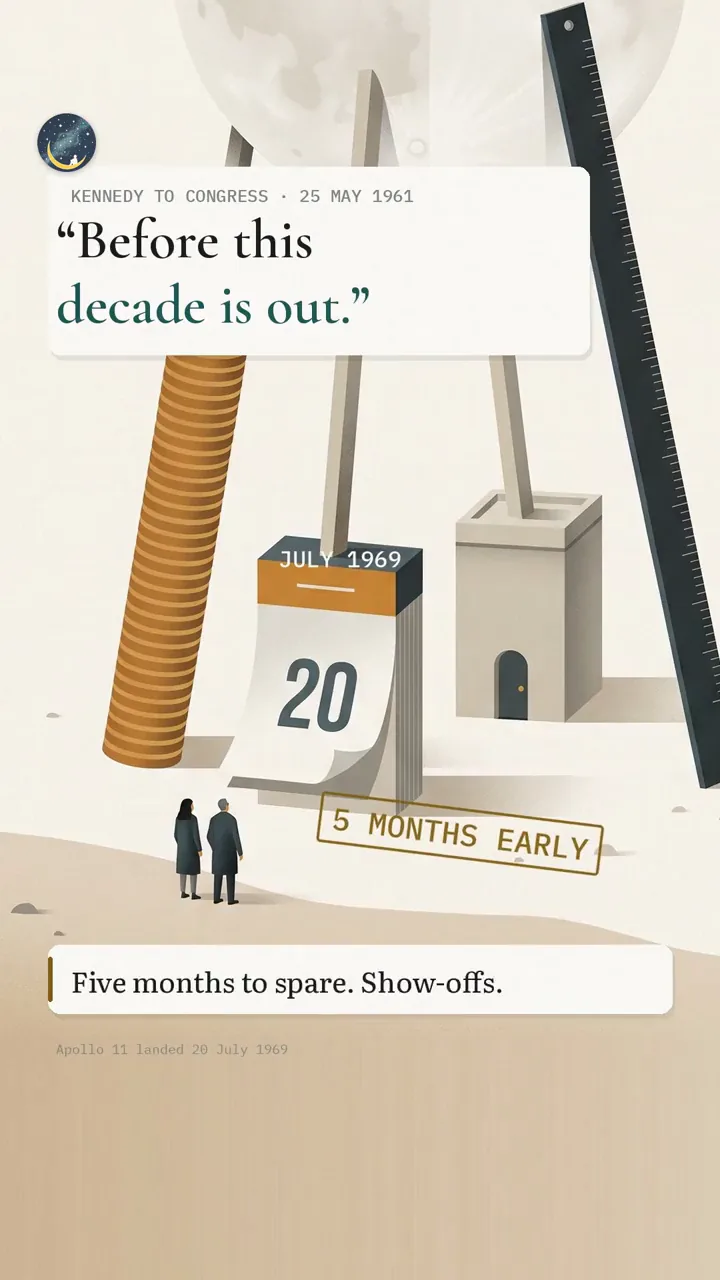
Apollo, 1961. On 25 May 1961 John F. Kennedy told Congress the nation “should commit itself to achieving the goal, before this decade is out, of landing a man on the moon and returning him safely to the earth”, and asked for billions to do it.28 Apollo cost about $309 billion in today’s money, and the landing came in July 1969.29
In a recorded meeting in 1962, Kennedy said “I’m not that interested in space”, because the Soviets had “made this a test of the system”.30 And in most polls of the 1960s, less than a majority of Americans thought the moon was worth the cost.31 I think it worked anyway, because money, a date and a single agency did the work. Enthusiasm came after success, not before it. That gives me four tests for any name that wants to become a mission: is there money behind it, is there a date, is there one agency in charge, and is there a way to check the result? Apollo had the first three, and the moon was the fourth: it landed or it did not.
I first thought this order was the same move with the same ending. It isn’t. Score it on the four tests. Money: the order appropriates nothing itself, and the fact sheet points to more than $5 billion announced for a separate programme, the Genesis Mission, against Apollo’s roughly $309 billion in today’s money.829 Date: none for the thing itself, only 60 days for a proposed definition. One agency: none, since it tells every agency to change its words. A way to check: not yet, because nobody has said what would count as Super Intelligence.2
Japan, 1982. The Fifth Generation project named a ten-year mission for “epoch-making” AI computers and produced no commercial success. Yet rivals answered, with Britain’s Alvey programme and America’s Strategic Computing Initiative.32 The name worked most on rivals, who spent their own money.
“Star Wars”, 1983. Ronald Reagan proposed space-based missile defence. The next morning Senator Ted Kennedy called it “reckless Star Wars schemes”, and his nickname became the name everyone used.33
Who answered the name
Many said no, at first. China said it “respects their choice of the term” and kept saying AI.26 California’s governor ordered state agencies to keep “AI” as the official term.34 Asked which name they preferred, 53% of Americans chose “artificial intelligence” and 9% chose “super intelligence” (YouGov, 28 September, 21,449 adults).35
Then, five days after the order, seventeen countries said yes. On 4 October the United States and sixteen others, among them Japan, Korea, Germany, Italy and the UK, endorsed the Kyoto Vision for science, a declaration that uses “SI” and never defines it. China and India were not on the list.36
The sociologist Pierre Bourdieu called the state’s power to name things “the monopoly of official naming”. But he added a condition: symbolic power “can be exercised only if it is recognized”.37 So who recognises the name? Of those who answered, some are close partners of Washington and some are not, and I do not know why each one signed. California’s governor is a separate case: a refusal from inside the United States, not from a foreign government. And the public, in one poll, preferred the old name.
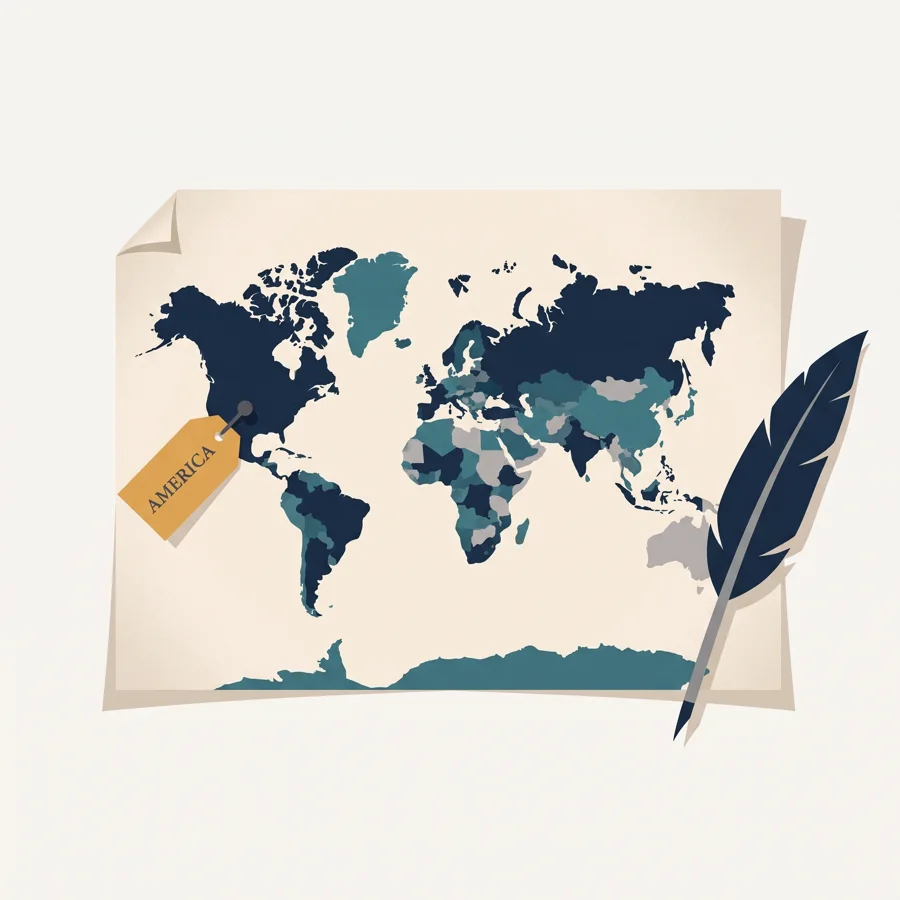
Maps tell the same story. In 1507 Martin Waldseemüller wrote “America” on a world map. On his 1513 map he dropped the name. Too late: everyone else kept it.38 When the Gulf of Mexico became the “Gulf of America”, US agencies and map services for US users adopted it. The Associated Press, Mexico and the UK refused.39
That is when the picture came together for me:
A name only works if people answer to it. And who answers depends on who needs you.
This is a hypothesis, not a law. It fits the Gulf of America, the Kyoto list and China’s polite refusal. It would be wrong if “SI” spreads among countries that don’t depend on Washington, or if the public adopts it without being asked. Apollo is the case that would break it: where enough money and institutions stand behind a name, public agreement mattered less.
What I don’t know, and what to watch
What I refuse to claim. Why they did it. What was agreed with Xi. That anyone lied, or that any safety warning was insincere. Why each of the sixteen other countries signed in Kyoto.
What to watch. Around 28 November: whether the proposed definition is published, and whether it is drawn around today’s systems or sets a harder bar. Whether “SI” spreads beyond countries that depend on Washington. And whether money follows the name. A name with a budget is a mission. A name without one is a request.
Maybe one day the job will grow into the title. Until then I’ll watch the doors: who screws the new plate on, who leaves the old one up, and what each of them needs from the people holding the screwdriver.
When a name arrives before the thing, who decides what it means: the people who say it, or the people who hear it?
We will read the definition on 28 November, if it is published. You are welcome to read it with us.
A note on conflict of interest. Anthropic appears in this story: its chief executive, Dario Amodei, wrote the essay about slowing down, and the company was in a dispute with the Pentagon that we mention. Anthropic’s AI models also helped with our research. We checked every claim that touches Anthropic first and kept to what is on the public record, and a model from another company checked the public facts independently.
How this was madeAnthropic appears in this story, and its models helped our research, so a model from another company checked the public facts. How we make this
Sources
Every number, name, date and quote above points to one of these. If one does not say what we said it says, tell us.
- 1President Donald Trump, address to the UN General Assembly, 22 September 2026, as quoted by PolitiFact; "sound fake" as reported by Euronews, 24 September 2026. Wording varies slightly between outlets and no official transcript was found. No public link confirmed.
- 2Executive Order 14434, "Inaugurating the Era of Super Intelligence", 29 September 2026, Sections 1 to 4. Federal Register 91 FR 63129, 2 October 2026. Read at source. Open the source
- 3John McCarthy, Marvin Minsky, Nathaniel Rochester and Claude Shannon, "A Proposal for the Dartmouth Summer Research Project on Artificial Intelligence", 31 August 1955. Open the source
- 4Nils J. Nilsson, "John McCarthy 1927 to 2011: A Biographical Memoir", National Academy of Sciences, 2012 (McCarthy's own explanation of the name). Open the source
- 515 U.S.C. 9401(3), the statutory definition of artificial intelligence; Freshfields client note on Executive Order 14434, October 2026. Open the source
- 6Executive Order 14347, 5 September 2025 ("Department of War" as a secondary title); Senate Armed Services Committee vote of 18 to 9 on the FY2027 defence bill, June 2026 (trade press). Not yet law. Open the source
- 7Executive Order 14172, 20 January 2025, "Restoring Names That Honor American Greatness". Open the source
- 8White House, "Fact Sheet: President Donald J. Trump Inaugurates the Era of Super Intelligence", 29 September 2026. Read in full on 6 October 2026. No stable public link recorded.
- 9Our own search of news and scholarship, 4 to 6 October 2026. An absence of evidence, not proof.
- 10François Chollet, "On the Measure of Intelligence", 2019. Open the source
- 11Nick Bostrom, Superintelligence: Paths, Dangers, Strategies, Oxford University Press, 2014. Open the source
- 12Dan Hendrycks, Yoshua Bengio et al., "A Definition of AGI", October 2025 (33 authors). Open the source
- 13ARC Prize, ARC-AGI-3 launch post (25 March 2026) and the official leaderboard, which lists which testing setup each result used (September 2026). Re-checked on 4 October 2026. The leaderboard changes, so check the date on each result. Open the source
- 14Fabrizio Dell'Acqua et al., "Navigating the Jagged Technological Frontier", Harvard Business School working paper 24-013, 2023 (758 consultants). No public link confirmed.
- 15Robert K. Merton, "The Self-Fulfilling Prophecy", Antioch Review, 1948. Not freely available online.
- 16Milan court documents of 2024, as reported by Reuters and other outlets: a contractor was paid as little as 53 euros per bag that retailed for 2,600 euros. The bag is a Dior bag. Dior's Italian unit, Manufactures Dior, was placed under court administration in 2024 over labour conditions at its suppliers. That is a protective measure, not a finding of guilt, and Dior said it condemned the practices. The workshops were in Italy. No public link confirmed.
- 17Hilke Plassmann, John O'Doherty, Baba Shiv and Antonio Rangel, "Marketing actions can modulate neural representations of experienced pleasantness", PNAS, 2008 (20 participants). Open the source
- 18Epoch AI, LLM inference price trends (price to reach a fixed capability fell 9 to 900 times a year); provider pricing pages, 2026 (headline prices of the newest models rose). Open the source
- 19Bank for International Settlements, Annual Economic Report, 28 June 2026; BIS Working Paper 1367. Open the source
- 20Goldman Sachs research, reported by Investing.com, 25 September 2026. Open the source
- 21Dario Amodei, "We Must Pace the Frontier", 12 September 2026; CNN, 12 September 2026. Open the source
- 22Fortune, 1 October 2026; CBS News, 29 September 2026 (the administration rejecting a slowdown). No public link confirmed.
- 23ABC7 News, on a federal judge blocking the Pentagon's supply-chain-risk designation of a San Francisco AI company, 2026. Open the source
- 24MercoPress, 25 September 2026; CSIS, takeaways from the Trump and Xi summit, September 2026. Open the source
- 25White House, fact sheet on the state visit, 25 September 2026. Open the source
- 26China, Ministry of Foreign Affairs, Foreign Ministry Spokesperson's Remarks on Issue Concerning Artificial Intelligence, 26 September 2026. Read at source. Open the source
- 27Bloomberg, "Trump Responds to AI Backlash With 'Super Intelligence' Rebrand", 29 September 2026. Open the source
- 28John F. Kennedy, Special Message to the Congress on Urgent National Needs, 25 May 1961. Open the source
- 29The Planetary Society, "How much did the Apollo program cost?" (about $309 billion in 2025 dollars for Project Apollo alone; the estimate changes with the base year and what is counted). Open the source
- 30Kennedy and James Webb, recorded meeting, 21 November 1962 (NASA History Office).
- 31Gallup polling on the Apollo programme in the 1960s (less than a majority thought it worth the cost in most polls; a narrow majority only after the 1969 landing), as summarised by NASA historian Roger Launius and reported by NBC News. Gallup's own releases were not opened. Open the source
- 32Histories of Japan's Fifth Generation Computer Systems project (ICOT), the UK Alvey programme and the US Strategic Computing Initiative (secondary sources). Open the source
- 33Ronald Reagan, address of 23 March 1983; contemporary press on Senator Ted Kennedy's remark, 24 March 1983. No public link confirmed.
- 34California executive order, 30 September 2026, as reported by SF Standard and Forbes India. Open the source
- 35YouGov daily question, 28 September 2026 (21,449 US adults, an opt-in online panel). Re-checked on 4 October 2026. We found no public link to the YouGov page itself.
- 36White House, "U.S. Leads International Coalition to Endorse Kyoto Vision for a Golden Age of Science", 4 October 2026. Read at source. Open the source
- 37Pierre Bourdieu, Language and Symbolic Power, Harvard University Press, 1991, about page 170 and page 242 (page numbers from a scan). Not freely available online.
- 38Martin Waldseemüller, Universalis Cosmographia (1507), Library of Congress; his 1513 map omits the name. Open the source
- 39Reporting on adoption of the "Gulf of America" name, 2025 (agencies, Google, Apple, Bing, the Associated Press, Mexico, the UK); Marquette Law School poll, February 2025. The linked report covers Google Maps; the other positions are as reported elsewhere, with no single link. Open the source
- 40Mesut Cicek et al., "Adverse impacts of revealing the presence of Artificial Intelligence (AI) technology in product and service descriptions on purchase intentions", Journal of Hospitality Marketing & Management, 2024. Open the source
Words, people and ideas
Every dotted word in the story opens a card. Here they all are, in one place.
Word Executive order
A written instruction from a US president to the federal government. It directs agencies and officials. It cannot change a law passed by Congress, and it does not bind companies, states or other countries. Executive Order 14434 is this kind of order: it tells agencies which words to use in their own documents, and it creates no rights that anyone can enforce. Read more
Person John McCarthy
McCarthy (1927 to 2011) was an American computer scientist. In 1955 he and three colleagues wrote the proposal for a summer study at Dartmouth College, and he chose the name “artificial intelligence” for it. Years later he said he had to call it something, and had a vague feeling he had heard the phrase before. The biographical memoir by Nils Nilsson tells the story. Read more
Person François Chollet
Chollet is a French AI researcher who created the ARC tests of machine reasoning. In a 2019 paper he argued that intelligence is not how much a system knows but how efficiently it learns something new, because with unlimited data you can buy skill without intelligence. We cite his definition. We do not attribute to him any view about the order. Read more
Word Narrow, general, super
A common way to talk about AI in three rungs. Narrow AI works well inside one bounded task, like a chess engine. General AI means broad, human-like ability, and there is no single agreed definition. Superintelligence, in Nick Bostrom's 2014 definition (from his book), greatly exceeds human performance in virtually all areas of interest. The narrow and general split follows DeepMind's "Levels of AGI" paper (arXiv 2311.02462). The order defines “Super Intelligence” as simply today's AI. Read more
Person Nick Bostrom
Bostrom is a philosopher who worked at Oxford's Future of Humanity Institute, closed in 2024. His 2014 book Superintelligence defined the word as an intellect that greatly exceeds the cognitive performance of humans in virtually all domains of interest. We do not attribute to him any view on whether today's systems are super.
Work ARC-AGI-3
A test from the ARC Prize, built to measure how well an AI system learns in new situations rather than recalling what it was trained on. Frontier systems scored 0.51% at its March 2026 launch. By September, verified scores had passed 96%, and one run came close to 100%, with a helper tool that keeps the model's reasoning between steps. With the standard setup they were about 40 to 55%. The official leaderboard lists which setup each result used. Read more
Idea Self-fulfilling prophecy
A term from the sociologist Robert K. Merton, 1948: a false definition of a situation, once people act on it, can make itself come true. His example is a healthy bank that fails because a rumour of failure sends every customer to withdraw their money at once.
Work The $90 wine study
A 2008 study in PNAS by Hilke Plassmann and colleagues. Twenty people tasted the same wines while their brains were scanned. When told a wine cost $90 instead of $10, they rated it more pleasant, and the brain region linked to pleasure was more active. It is a small study, but it shows a label changing the experience itself, not only the price. Read more
Person John F. Kennedy
President of the United States from 1961 to 1963. On 25 May 1961 he asked Congress to commit to landing a man on the moon before the decade was out. A recorded meeting from 21 November 1962 has him saying he was not that interested in space, and that the Soviets had made it a test of the system. Read more
Idea Fifth Generation Computer Systems
A ten-year Japanese national project from 1982, run through the research institute ICOT, to build “epoch-making” computers for artificial intelligence. By the usual estimates it spent roughly 57 billion yen, around US$320 million, and produced prototypes but no commercial success. Britain and the United States answered with their own programmes, Alvey and the Strategic Computing Initiative. The figures come from secondary histories, so treat them as rough. Read more
Person Ted Kennedy
A US senator from Massachusetts. The morning after President Reagan proposed space-based missile defence on 23 March 1983, he called it “reckless Star Wars schemes”. The nickname stuck and became the name everyone used, ahead of the official one.
Work The Kyoto Vision
A declaration about science, released by the White House on 4 October 2026. The United States and sixteen other countries endorsed it: Argentina, Bulgaria, Chile, Cyprus, Germany, Greece, Indonesia, Italy, Japan, Kazakhstan, Korea, New Zealand, Poland, Singapore, the UAE and the UK. It uses “SI” and never defines it. China and India were not on the list. Read more
Person Pierre Bourdieu
A French sociologist. In Language and Symbolic Power (1991) he wrote that the state holds the monopoly of official naming, and that symbolic power, the power to make people see and believe, can be exercised only if it is recognized. The same idea is why this story asks who actually accepts the new name.
Person Martin Waldseemüller
A German mapmaker. His 1507 world map, Universalis Cosmographia, is the first to print the name “America”. On his 1513 map he dropped the name, but by then it was too late: other mapmakers had kept it. The 1507 map is held by the Library of Congress. Read more